Electrical: The Basics in a nutshell
The water analogy:
Amps (Amperes) are like the amount of water that flows through the hose. More water means more amps.
Volts are like the pressure of the water in the hose. Higher pressure means the water can travel further and with more force.
Ohms are like how narrow or wide the hose is. A narrow hose makes it harder for water to pass through, which is like having more resistance.
Watts are like the power that the water can deliver when it comes out of the hose. More water and higher pressure mean more power.
Ampere (A) (I)
Ampere or amp (symbol: A) is the unit of electrical current. The Ampere unit is named after Andre-Marie Ampere, from France. One Ampere is defined as the current that flows with electric charge of one Coulomb per second.
Coulomb (C)
A coulomb (C) is the standard unit of electric charge, representing a large quantity of electrons, defined as the charge transferred by one ampere of current flowing for one second, or roughly 6.24 trillion billion (6.24 x 10¹⁸) electrons. It quantifies how much electrical charge moves, with current (Amperes) being coulombs per second, and is named after French physicist Charles-Augustin de Coulomb.
1 Coulomb (C) = 1 Ampere (A) × 1 Second (s).
Farad (F)
Farad is the unit of capacitance. It is named after Michael Faraday. The farad measures how much electric charge is accumulated on the capacitor. 1 farad is the capacitance of a capacitor that has charge of 1 coulomb when applied voltage drop of 1 volt.
1F = 1C / 1V
Kilovolt-amp (kVA)
kVA is kilo-volt-ampere. kVA is a unit of apparent power, which is an electrical power unit. 1 kilo-volt-ampere is equal to 1000 volt-ampere:
‘Apparent’ Power – The glass of beer principle, 1 pint is apparent, but 95% is beer, whilst 5% is foam. It’s what the power could be at maximum, but in real life, loss of power occurs.
Watt (W) & Kilowatt (kW) (P)
Watt is the unit of power (symbol: W). The watt unit is named after James Watt, the inventor of the steam engine. One watt is defined as the energy consumption rate of one joule per second.
1W = 1J / 1s
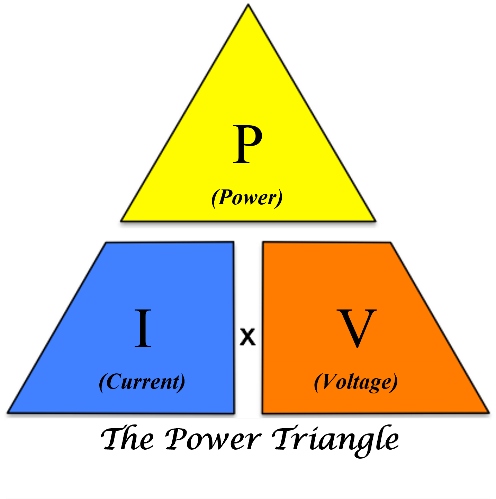
One watt is also defined as the current flow of one ampere with a voltage of one volt.
1W = 1V × 1A
Kilowatt-hour (kWh)
Kilowatt-hour is an energy unit (symbol kWh or kW⋅h). One kilowatt-hour is defined as the energy consumed by power consumption of 1kW during 1 hour:
1 kWh = 1kW ⋅ 1h
Ohm (Ω)
Ohm (symbol Ω) is the electrical unit of resistance. The Ohm unit was named after George Simon Ohm.
1Ω = 1V / 1A = 1J ⋅ 1s / 1C2
Ohm’s Law establishes a fundamental relationship in electrical engineering, expressed through the equation V = I * R, where V denotes voltage in volts, I signifies current in amperes, and R represents resistance in ohms. This equation quantifies how voltage across a component is directly proportional to the product of the current flowing through it and its resistance, providing a critical foundation for analysing electrical circuits.
V = I x R
V = voltage (volts)
I = current (amps)
R = resistance (ohms)
Volt (V)
Volt is the electrical unit of voltage or potential difference (symbol: V). One Volt is defined as energy consumption of one joule per electric charge of one coulomb.
1V = 1J/C
One volt is equal to current of 1 amp times resistance of 1 ohm:
1V = 1A ⋅ 1Ω
The Volt unit is named after Alessandro Volta, an Italian physicist who invented an electric battery.
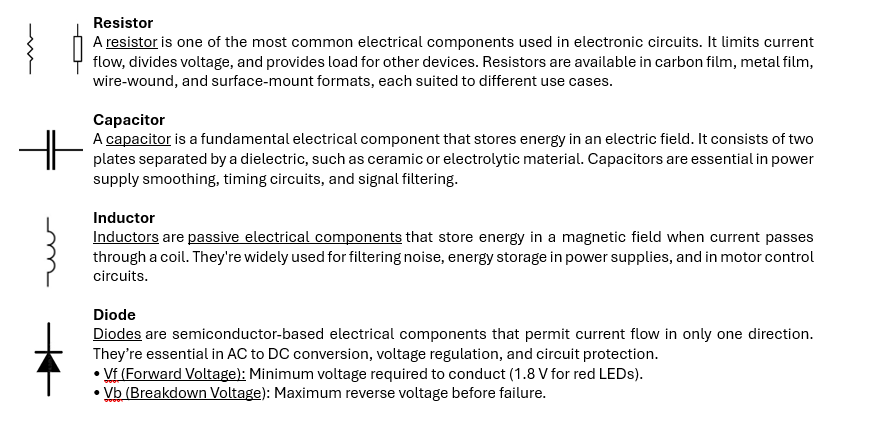
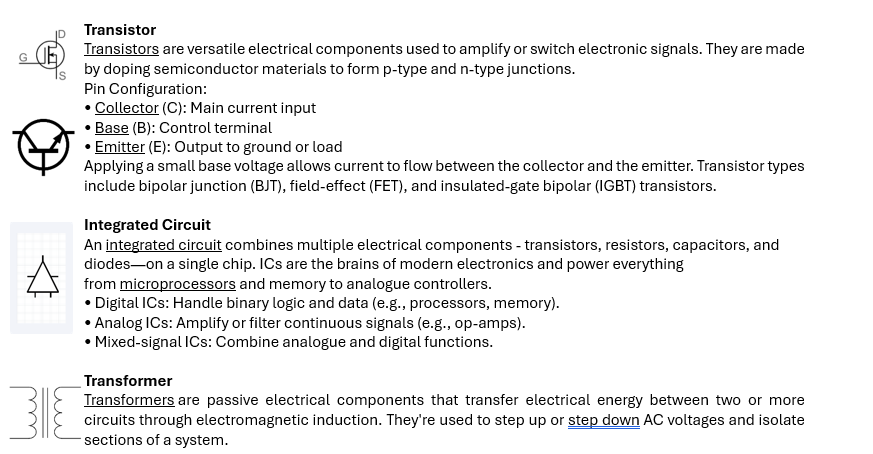
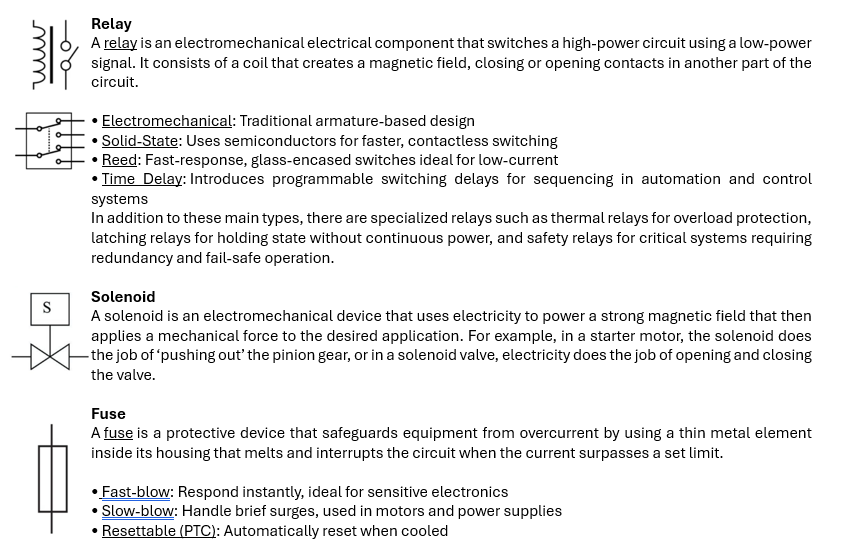
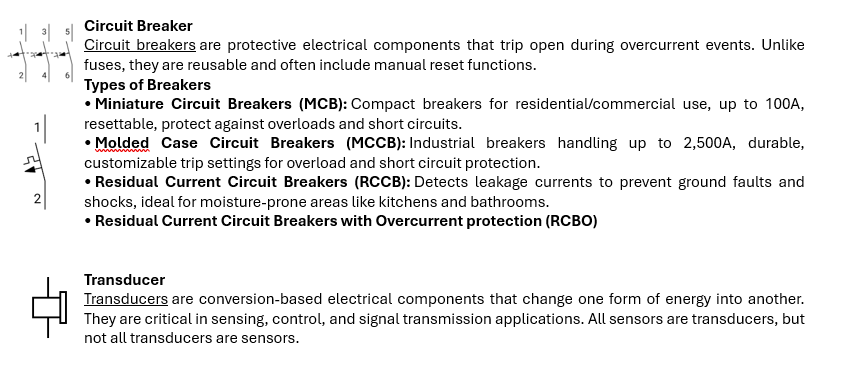
Electrical Components